
Uses fewer words or sentences than expected
Child Development & Learning Centre Bengaluru
✦ • Kamanahalli, Bengaluru
SPEECH & COMMUNICATION SUPPORT
Helping Children Express, Understand and Connect With Confidence
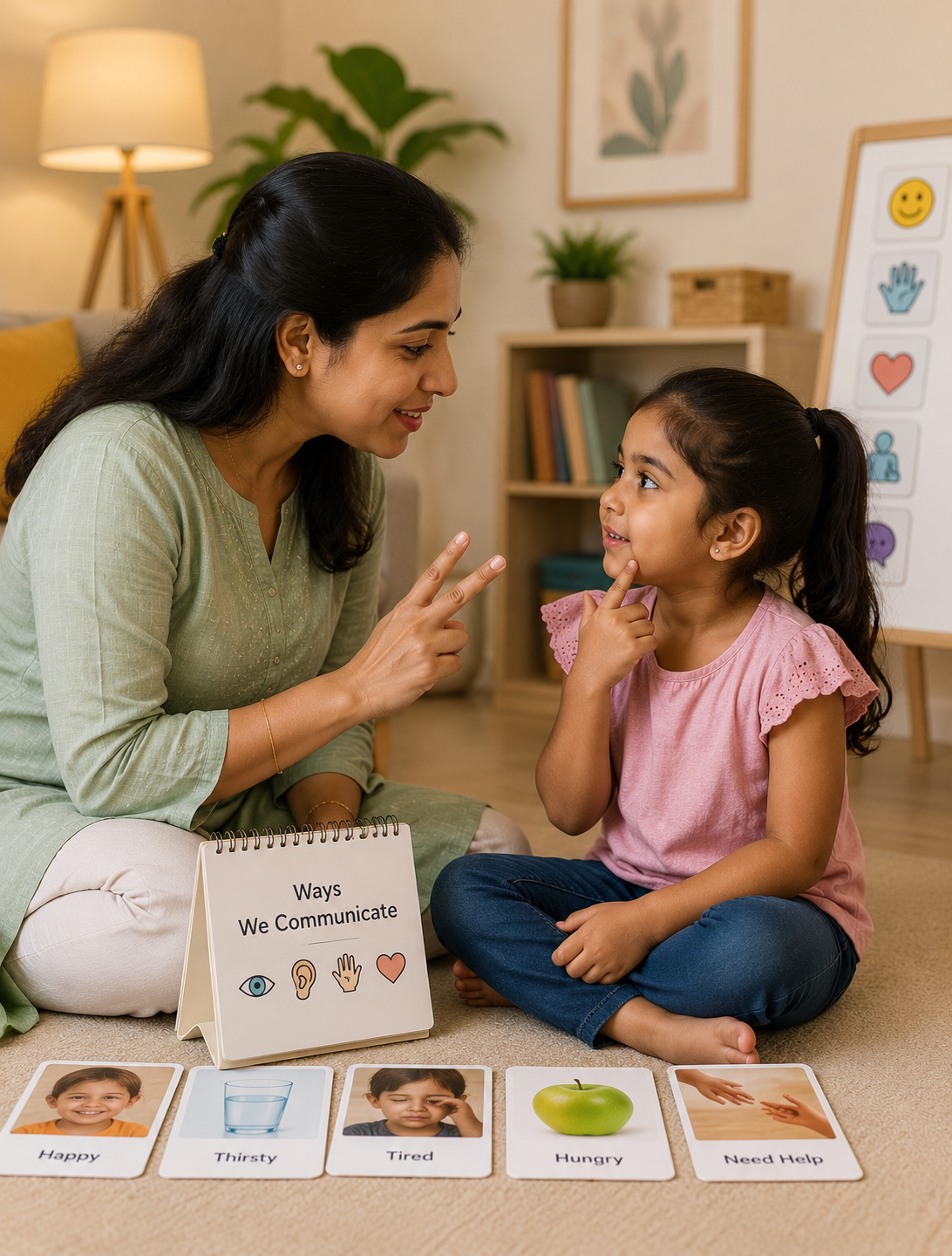
Communication is much more than speaking clearly.
It includes how a child understands language, expresses needs, shares ideas, responds to others and participates in everyday conversations.
At AstraKids, Speech & Communication Support focuses on developing practical communication abilities that can support participation at home, during learning and in social situations.
✓ Understanding Language
✓ Expressing Needs
✓ Speech Clarity
✓ Social Communication
LISTEN✦
UNDERSTAND✦
EXPRESS✦
RESPOND✦
CONNECT✦
COMMUNICATE✦
LISTEN✦
UNDERSTAND✦
EXPRESS✦
RESPOND✦
♡
COMMUNICATION MATTERS
Every child deserves a way to be understood.
UNDERSTANDING COMMUNICATION
Communication Can Look Different for Every Child
Some children may know exactly what they want to say but find it difficult to put their thoughts into words.
Others may speak confidently but have difficulty understanding questions, following instructions or maintaining a conversation.
Words
Sentences
Gestures
Eye Gaze
Pictures
Actions
Body Language
Effective communication means helping children develop ways to understand others and express their own needs, choices, thoughts and feelings successfully.
UNDERSTANDING SPEECH & COMMUNICATION DIFFICULTIES
Where Does Communication Become Difficult?
Communication develops at an individual pace. Some children may need additional support to strengthen particular skills.
Finds it difficult to communicate wants and needs
Has difficulty pronouncing certain sounds or words
Is difficult for unfamiliar people to understand
Struggles to understand questions
Needs instructions repeated frequently
Finds multi-step directions difficult
Has difficulty finding the right words
Rarely initiates conversations
Has difficulty taking conversational turns
Struggles to understand gestures or social cues
Becomes frustrated when others do not understand them
✦
A communication difficulty does not look the same in every child. Understanding where communication becomes difficult is an important first step towards appropriate support.
RECEPTIVE LANGUAGE SUPPORT
Helping Children Understand What Others Communicate
Receptive language refers to a child's ability to understand spoken language.
Recognise familiar words
Understand questions
Follow instructions
Identify people and objects
Understand concepts
Follow classroom directions
Understand stories and conversations
Interpret information they hear
!
Some children may appear distracted or uncooperative when they have actually not fully understood what was asked of them.
Support may include shorter instructions, visual cues, demonstrations, repetition and additional processing time.

LISTEN • PROCESS • UNDERSTAND
Clear information supports participation.

EXPRESSIVE LANGUAGE SUPPORT
Helping Children Communicate Their Thoughts and Needs
Expressive language is how children communicate information to others.
Naming Objects
Building Vocabulary
Combining Words
Creating Sentences
Answering Questions
Asking Questions
Making Choices
Requesting Help
Expressing Feelings
Retelling Events
Describing Experiences
Conversations
Children should be given enough time to organise and communicate their thoughts rather than being rushed to answer.
SPEECH CLARITY & SOUND DEVELOPMENT
Supporting Clearer and More Confident Speech
Some children know what they want to communicate but may have difficulty producing certain speech sounds clearly.

Sound Awareness
Helping children notice and differentiate speech sounds.
Sound Production
Practising how individual sounds are produced.
Words & Phrases
Gradually using sounds within meaningful words.
Everyday Communication
Encouraging clearer speech during natural conversations.
Progress should be gradual and supportive rather than making a child
feel constantly corrected.
BUILDING VOCABULARY & SENTENCE SKILLS
Giving Children the Words to Describe Their World
Vocabulary gives children the words they need to understand and describe their experiences.
Everyday Routines
Books & Stories
Picture Cards
Play Activities
Songs
Classroom Activities
Conversations
Real-World Experiences
LEARNING THROUGH MEANING
One Word. Many Real Examples.
Learning the word “big” can involve a big ball, big box, big dog and big building.
This helps children understand the concept rather than simply memorising one example.
CONVERSATION & SOCIAL COMMUNICATION
Communication Helps Children Build Relationships
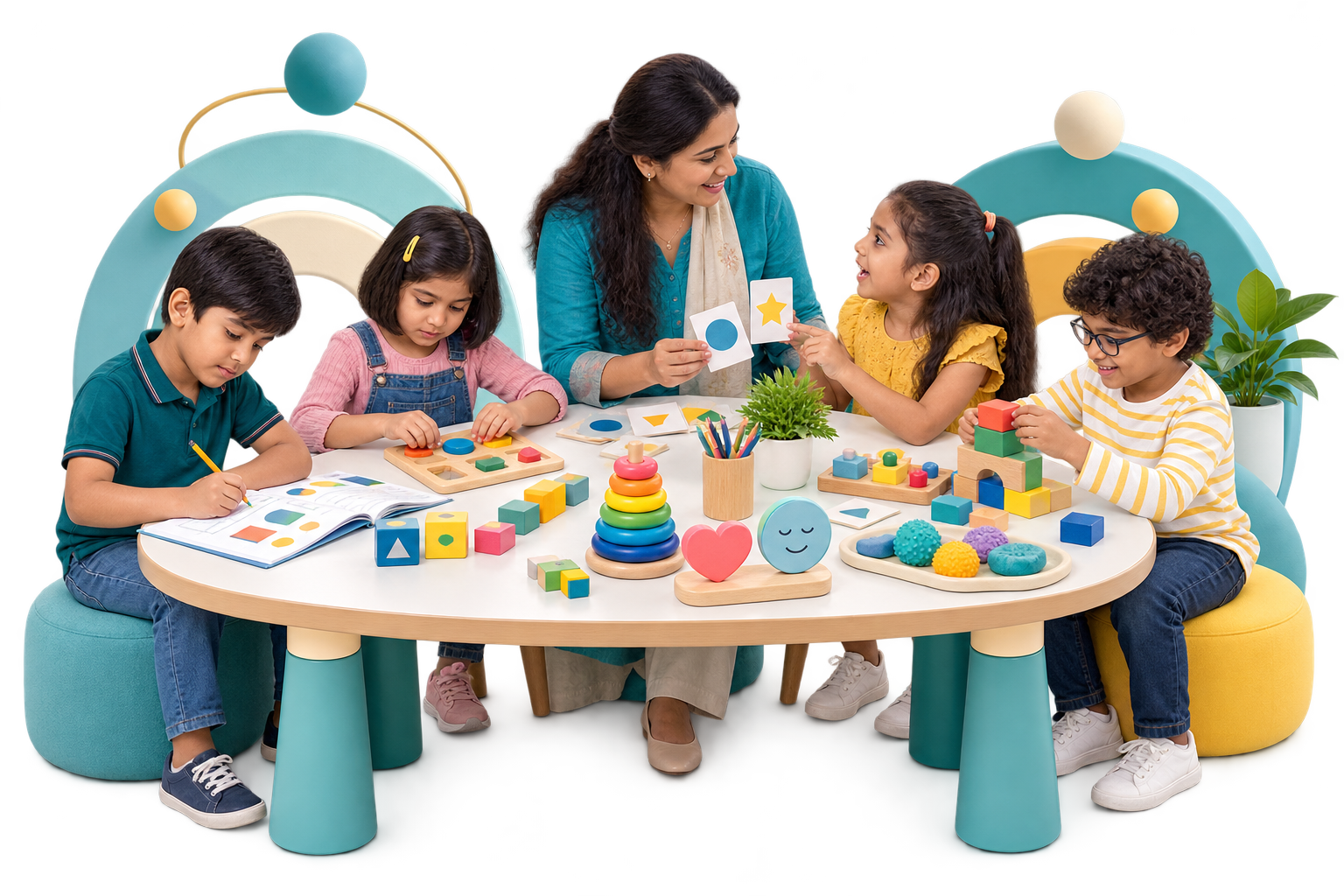
Successful conversations involve more than speaking.

♡
Social communication skills can be practised through play, structured activities and everyday interactions.
USING VISUAL COMMUNICATION SUPPORT
Some Children Understand Better When They Can See It as Well as Hear It
Picture Cards
Choice Boards
Visual Schedules
First–Then Boards
Emotion Cards
Routine Sequences
Gesture Prompts
Object Cues
“Put your book away, get your bottle and bring your school bag.”
BOOK
→
BOTTLE
→
BAG
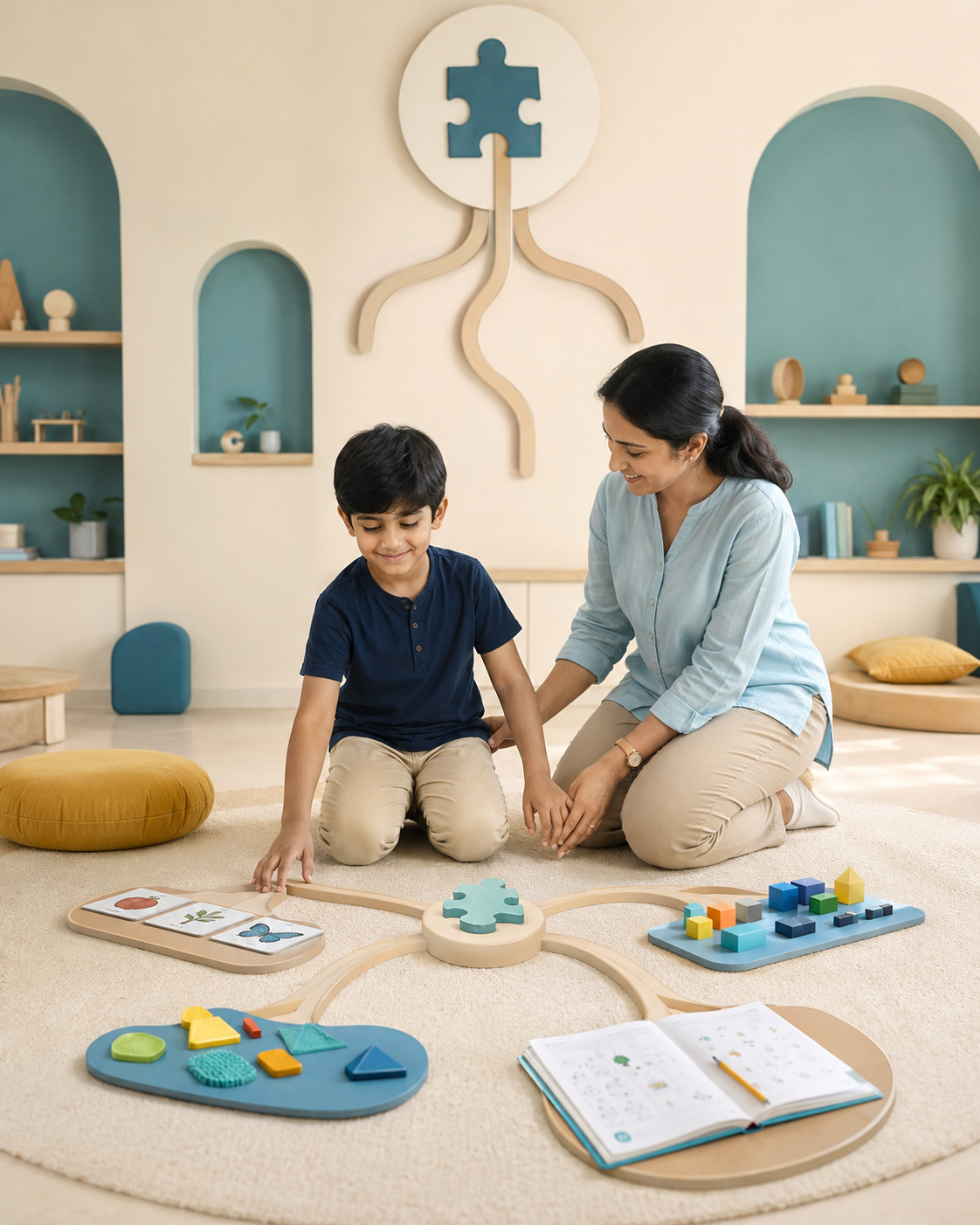
Visual support does not replace communication. It can provide another pathway for understanding and expression.
HELPING CHILDREN COMMUNICATE THEIR NEEDS
Everyday Messages Can Make a Big Difference
Being able to express everyday needs may reduce frustration when a child cannot easily make themselves understood.
I want…
I don't want…
Help me.
I need a break.
I'm hungry.
I'm tired.
It hurts.
I'm finished.
I don't understand.
WHEN COMMUNICATION DIFFICULTIES AFFECT BEHAVIOUR
Look Beyond the Reaction to Understand the Message
Sometimes what appears to be a behavioural difficulty may have a communication component.
A child who becomes upset when an activity changes may be trying to communicate something they cannot yet express clearly.
Understanding the communication need behind a reaction can help adults
choose a more supportive response.
HOW PARENTS CAN ENCOURAGE COMMUNICATION AT HOME
Communication Practice Does Not Need to Feel Like Homework
Everyday activities provide many natural opportunities for children to practise communication.
Talk Together
Talk about what you are doing together.
Keep Instructions Clear
Use simple and manageable directions.
Allow Response Time
Give enough time for the child to organise a response.
Offer Choices
Give meaningful choices that encourage communication.
Read Together
Use picture books and simple story questions.
Expand Their Language
Add useful words naturally to what the child says.
Use Visual Support
Use gestures and pictures when helpful.
Encourage Requests
Avoid anticipating every need immediately.
Praise Attempts
Recognise the child's effort to communicate.
Avoid Constant Correction
Keep communication positive and natural.
WHAT PARENTS CAN NOTICE AND RECORD
Look for Patterns in Everyday Communication
Understanding
Can your child understand everyday instructions?
Expression
Can they communicate what they want or need?
Speech Clarity
How easily can familiar and unfamiliar people understand them?
Conversation
Can they participate in back-and-forth interaction?
Social Communication
How do they communicate with other children?
Frustration
Does communication difficulty regularly lead to frustration?
Helpful Strategies
Do pictures, gestures, shorter instructions or extra time help?
PERSONALISED SPEECH & COMMUNICATION SUPPORT AT ASTRAKIDS
Support Starts With Understanding How Your Child Communicates Today
Every child's communication profile is different.
AstraKids begins by understanding the child's current communication abilities, strengths and areas where additional guidance may be useful.
Understanding Language
Following instructions and understanding questions.
Expressing Needs
Communicating wants, choices and feelings.
Vocabulary & Sentences
Building words and increasingly meaningful language.
Speech Clarity
Supporting clearer production of sounds and words.
Conversation
Developing reciprocal communication.
Social Communication
Supporting communication during play and interactions.
WHEN TO CONSIDER ADDITIONAL SUPPORT
When Communication Challenges Begin to Affect Everyday Participation
Parents may consider seeking professional guidance when communication difficulties are persistent or regularly affect:
Communication of basic needs
Understanding instructions
Participation in learning
Family interactions
Play with peers
Expression of emotions
Communication confidence
Everyday routines
Important:
These observations alone do not establish a diagnosis. A qualified
professional can help determine whether further assessment or
specialised support may be appropriate.
HELPING EVERY CHILD FIND A WAY TO CONNECT
Communication Gives Children a Way to Participate, Connect and Be Understood
With patient guidance, appropriate strategies and consistent opportunities to communicate, children can gradually develop greater confidence in understanding others and expressing themselves.
?
HAVE CONCERNS ABOUT YOUR CHILD'S COMMUNICATION?
Speak with the AstraKids team to explore appropriate support for
your child's individual learning and communication needs.
Professional Disclaimer:
AstraKids provides educational and developmental support according to
individual requirements. Progress and development timelines may vary for
every child. Website information should not replace medical diagnosis,
clinical treatment or professional healthcare advice.