Child Development & Learning Centre Bengaluru
✦ • Kamanahalli, Bengaluru

SOCIAL SKILLS DEVELOPMENT
Helping Children Build Interaction, Teamwork and Meaningful Friendships
Social skills help children connect with others, communicate their ideas and participate comfortably in everyday relationships.
For some children, understanding social situations comes naturally. Others may need additional guidance to learn how to start conversations, take turns, share activities, understand emotions or participate comfortably with other children.
At AstraKids, Social Skills Development focuses on helping children build practical interaction skills through structured, supportive and age-appropriate experiences.
✓ Interaction
✓ Communication
✓ Teamwork
✓ Friendship Skills
CONNECT✦
COMMUNICATE✦
LISTEN✦
SHARE✦
TAKE TURNS✦
WORK TOGETHER✦
BUILD FRIENDSHIPS✦
CONNECT✦
COMMUNICATE✦
LISTEN✦
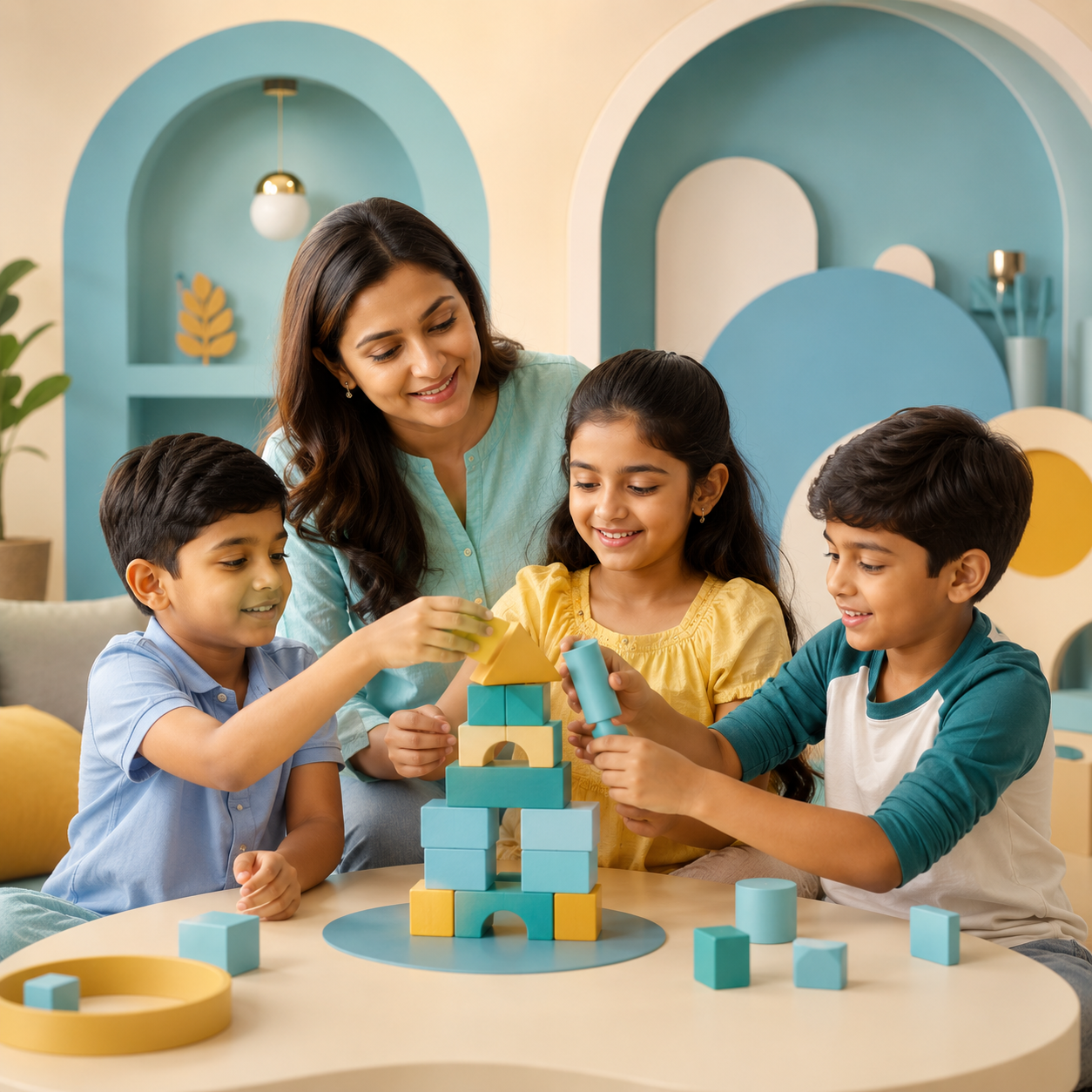
♡
MEANINGFUL CONNECTION
Social confidence grows through supportive practice.
UNDERSTANDING SOCIAL SKILLS DEVELOPMENT
Social Skills Support Everyday Connection
Social development involves many connected abilities that children use throughout everyday interactions.
Greet someone
Start an interaction
Listen to another person
Take conversational turns
Share materials
Wait for a turn
Participate in games
Follow group rules
Ask another child to play
Express preferences
Recognise emotions
Resolve disagreements
Work towards a shared goal
These abilities develop gradually through observation, practice and everyday social experiences.
WHEN SOCIAL INTERACTION FEELS DIFFICULT
Understanding the Child Before Labelling the Behaviour
Social situations can feel very different from one child to another.
Important:
These behaviours can have many possible explanations. Understanding the
child's individual strengths and difficulties is more useful than simply
labelling them as “shy” or “unsocial.”
BUILDING INTERACTION SKILLS
Helping Children Connect With Others
Successful interaction often begins with simple, repeatable skills.
Approach
Move towards another person appropriately.
Greet
Say hello or acknowledge someone.
Ask
Request to join an activity.
Listen
Pay attention while another person communicates.
Respond
Give an appropriate verbal or non-verbal response.
Continue
Maintain an interaction for several turns.
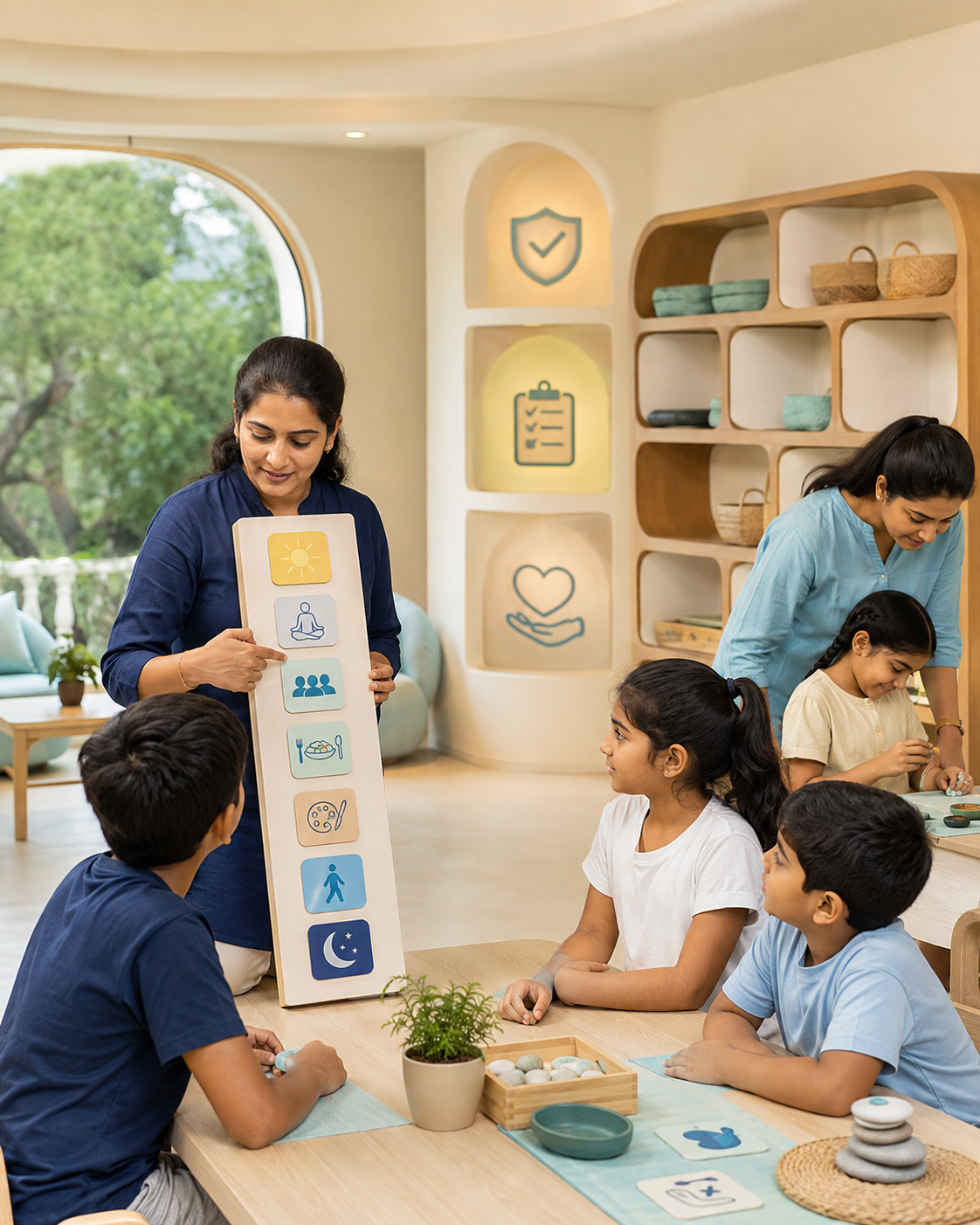
APPROACH • GREET • LISTEN • RESPOND
Build interaction skills one step at a time.
CONVERSATION SKILLS
Conversation Is More Than Speaking
Children need to understand the back-and-forth nature of communication.
Start a Conversation
Choose a Topic
Listen
Wait While Others Speak
Ask Questions
Answer Questions
Stay on Topic
Recognise Another Turn
Change Topics Appropriately
End a Conversation
Games, stories, role play and guided conversations can provide natural
opportunities to practise.
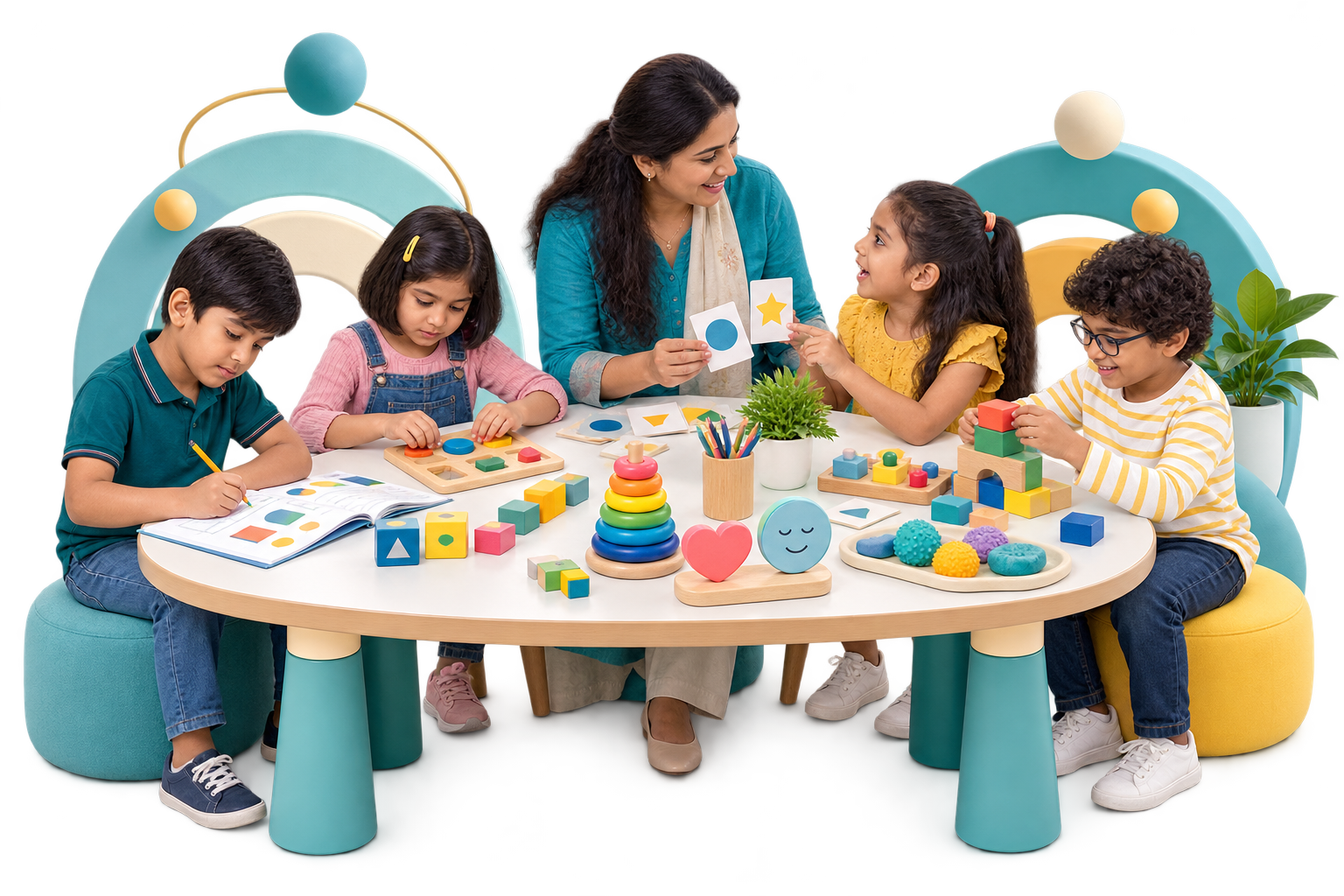
TURN-TAKING & SHARING
Learning to Wait, Share and Participate
Waiting can be difficult when a child is excited about an activity. Simple games can help build understanding gradually.
MY TURN
→
YOUR TURN
→
MY TURN
Wait briefly
Pass materials
Share resources
Follow game rules
Accept another child choosing first
Participate without controlling everything
Expectations can increase gradually as the child's confidence develops.
UNDERSTANDING EMOTIONS & SOCIAL CUES
Notice What Is Not Directly Spoken
Social interaction often requires children to notice additional information beyond spoken words.
Facial Expressions
Body Language
Tone of Voice
Gestures
Personal Space
Changes in Behaviour
Happy
Sad
Excited
Worried
Angry
Surprised
Frustrated
TEAMWORK & COOPERATIVE PLAY
Learning to Work Together
Cooperative activities help children understand that people can contribute different ideas while working towards the same goal.
Building Something Together
Completing Puzzles
Art Activities
Group Games
Pretend Play
Simple Projects
Cooking Activities
Problem-Solving Challenges
LISTENING
→
SHARING IDEAS
→
TAKING ROLES
→
HELPING
→
COMPLETING TOGETHER
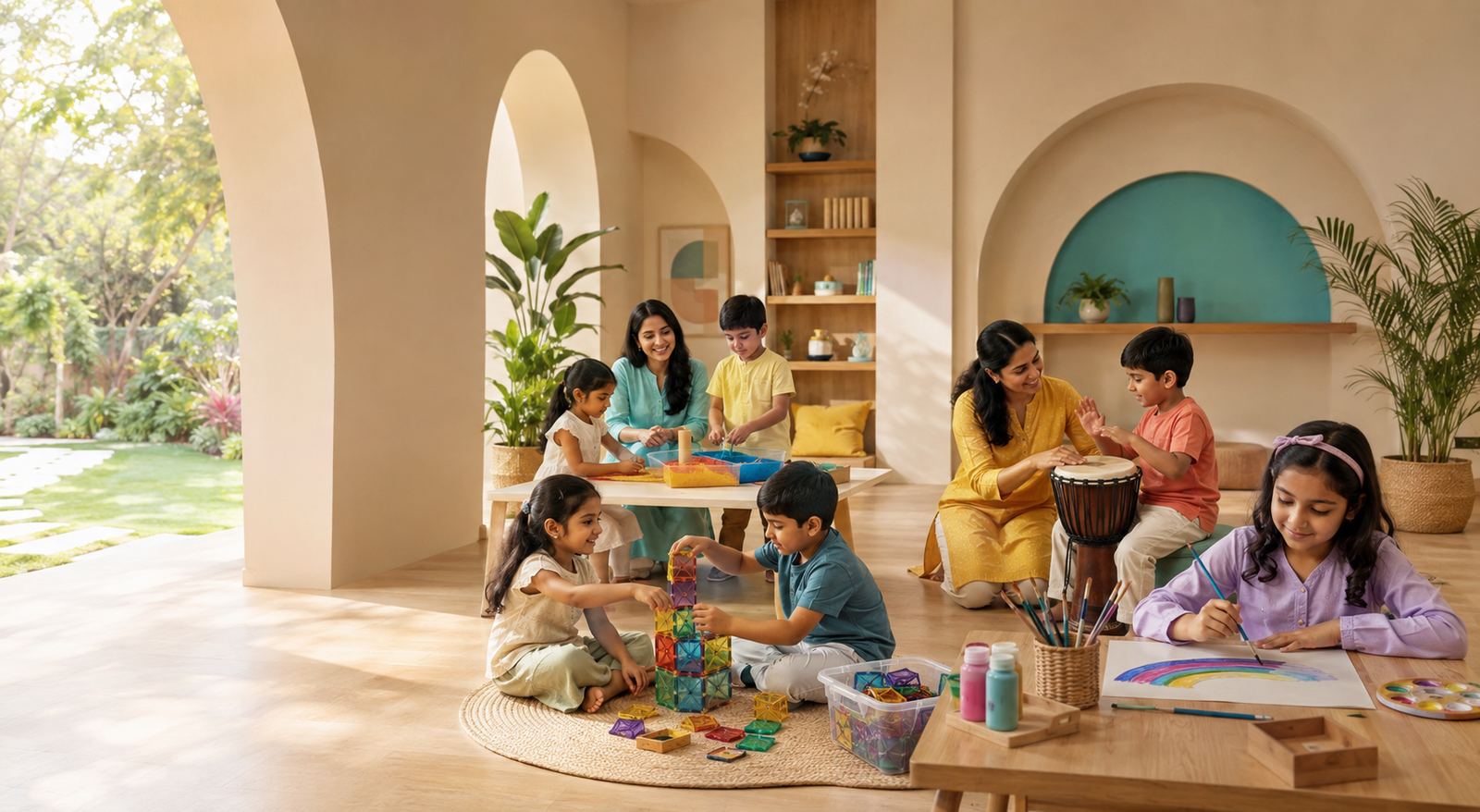
LISTEN • SHARE • HELP • COMPLETE
Different ideas can contribute to one shared goal.
FRIENDSHIP SKILLS
Building Comfortable, Meaningful Connections
Friendships provide opportunities for belonging, communication and shared experiences.
Approach Another Child
Ask to Join a Game
Suggest an Activity
Share Interests
Listen to Ideas
Handle Disagreements
Apologise Appropriately
Accept Different Preferences
Respect Boundaries
Invite Future Interaction
MANAGING DISAGREEMENTS
Give Children Practical Ways to Work Through Conflict
Disagreements are a normal part of social development. Children can gradually learn alternatives to shouting, withdrawing or immediately seeking adult intervention.
STOP
→
EXPLAIN
→
LISTEN
→
THINK
→
CHOOSE
“I was using that.”
“Can I have it when you're finished?”
“Can we take turns?”
“Let's choose another game.”
UNDERSTANDING PERSONAL SPACE & BOUNDARIES
Supporting Safer and More Respectful Interaction
Appropriate conversation distance
Ask before touching belongings
Recognise when someone wants space
Say “no” appropriately
Respect another person's “no”
Ask permission
Understand basic privacy
Respect personal boundaries
These skills contribute to safer, clearer and more respectful
social participation.
HELPING CHILDREN PARTICIPATE IN GROUPS
Group Participation Can Be Built Gradually
Group activities require several social, communication and emotional skills at the same time.
LISTEN
+
WAIT
+
FOLLOW INSTRUCTIONS
+
OBSERVE OTHERS
+
COMMUNICATE
+
MANAGE EMOTIONS
OBSERVE
→
JOIN BRIEFLY
→
PARTICIPATE WITH SUPPORT
→
PARTICIPATE LONGER
→
GREATER INDEPENDENCE
SOCIAL CONFIDENCE
Confidence Can Grow Through Small Successful Experiences
Some children understand what they should do socially but hesitate because they are unsure or worried about making a mistake.
Practise situations beforehand
Start with familiar people
Use small groups
Provide conversation starters
Recognise attempts to interact
Avoid forced participation
Allow time to become comfortable
Celebrate small social successes
Progress may begin with something as simple as greeting another child or sharing an activity for a few minutes.
SMALL SOCIAL SUCCESSES MATTER
Confidence grows through achievable participation.
HOW PARENTS CAN SUPPORT SOCIAL SKILLS AT HOME
Everyday Family Life Can Build Social Understanding
Children often learn social behaviour by watching the adults around them.
Play turn-taking games
Discuss characters' feelings
Encourage appropriate greetings
Practise asking for help
Model respectful conversations
Encourage listening
Provide cooperative activities
Arrange manageable social experiences
Talk through disagreements calmly
Praise positive interaction
Allow time to respond
Avoid comparisons with other children
WHAT PARENTS CAN NOTICE & RECORD
Notice Where Your Child Feels Most Comfortable
Initiation
Does your child approach or communicate with other children?
Response
How do they respond when someone approaches them?
Conversation
Can they participate in back-and-forth communication?
Play
Do they participate in shared or cooperative activities?
Turn-Taking
How do they manage waiting and sharing?
Social Understanding
Do they notice basic emotions and social cues?
Flexibility
How do they respond to another child's different idea?
Environment
Are interactions easier one-to-one than in larger groups?
PERSONALISED SOCIAL SKILLS DEVELOPMENT AT ASTRAKIDS
Respecting Each Child's Individual Social Style
Every child has their own personality, communication style, interests and social comfort level.
Social Interaction
Initiating and responding to others.
Conversation
Developing reciprocal communication.
Turn-Taking
Waiting and sharing participation.
Emotional Understanding
Recognising emotions in self and others.
Cooperative Play
Participating in shared activities.
Teamwork
Working towards a common goal.
Problem Solving
Managing everyday social disagreements.
Friendship Skills
Building and maintaining meaningful connections.
Social Confidence
Becoming more comfortable participating with others.
WHEN TO CONSIDER ADDITIONAL SUPPORT
When Social Difficulties Affect Everyday Participation
Additional guidance may be useful when social difficulties are persistent and regularly affect important areas of the child's life.
Peer Interaction
Classroom Groups
Play
Friendships
Communication
Emotional Wellbeing
Social Confidence
Community Participation
Important:
These observations alone do not establish a diagnosis. Communication
abilities, sensory needs, environment and overall development should
also be considered.
HELP YOUR CHILD BUILD SOCIAL CONFIDENCE
Helping Children Connect in Their Own Way
Social development is not about making every child behave or communicate exactly the same way.
It is about giving children the skills to express themselves, understand others, participate comfortably and develop meaningful relationships.
?
CONCERNED ABOUT SOCIAL INTERACTION, TEAMWORK OR FRIENDSHIPS?
Speak with the AstraKids team to explore support suited to your
child's individual strengths and needs.
Professional Disclaimer:
AstraKids provides personalised educational and developmental support
according to individual requirements. Specific outcomes and development
timelines may vary for every child. Information on this website should not
replace medical diagnosis, clinical treatment or professional healthcare advice.