Child Development & Learning Centre Bengaluru
✦ • Kamanahalli, Bengaluru

FOCUS & COGNITIVE DEVELOPMENT
Helping Children Strengthen Attention, Memory, Thinking and Planning Skills
Everyday learning requires much more than understanding academic concepts.
Children also need to focus on information, remember instructions, organise their thoughts, solve problems and plan what to do next.
At AstraKids, Focus & Cognitive Development support is designed to strengthen important thinking and learning skills through structured, engaging and developmentally appropriate activities.
✓ Attention & Focus
✓ Memory
✓ Planning
✓ Problem Solving
FOCUS✦
REMEMBER✦
THINK✦
PLAN✦
ORGANISE✦
SOLVE✦
BUILD INDEPENDENCE✦
FOCUS✦
REMEMBER✦
THINK✦

✦
THE GOAL
Understand how the child learns best.
UNDERSTANDING FOCUS & COGNITIVE DEVELOPMENT
Thinking Skills Support Everyday Learning
Cognitive development refers to the mental processes children use to learn, remember, think, organise information and solve problems.
These skills work together throughout the day and influence how children participate in learning, routines and everyday activities.
Listen to instructions
Focus on activities
Remember learning
Complete tasks in order
Organise materials
Solve puzzles
Make decisions
Switch between activities
Plan assignments
Recognise patterns
Understand cause & effect
Learn from experience
The goal is not simply to make a child “sit still” or “pay attention.” It is to understand how the child processes information and what helps them learn more effectively.
UNDERSTANDING ATTENTION & FOCUS
Helping Children Stay Engaged With a Task
Attention is the ability to direct and maintain focus on relevant information or activities.
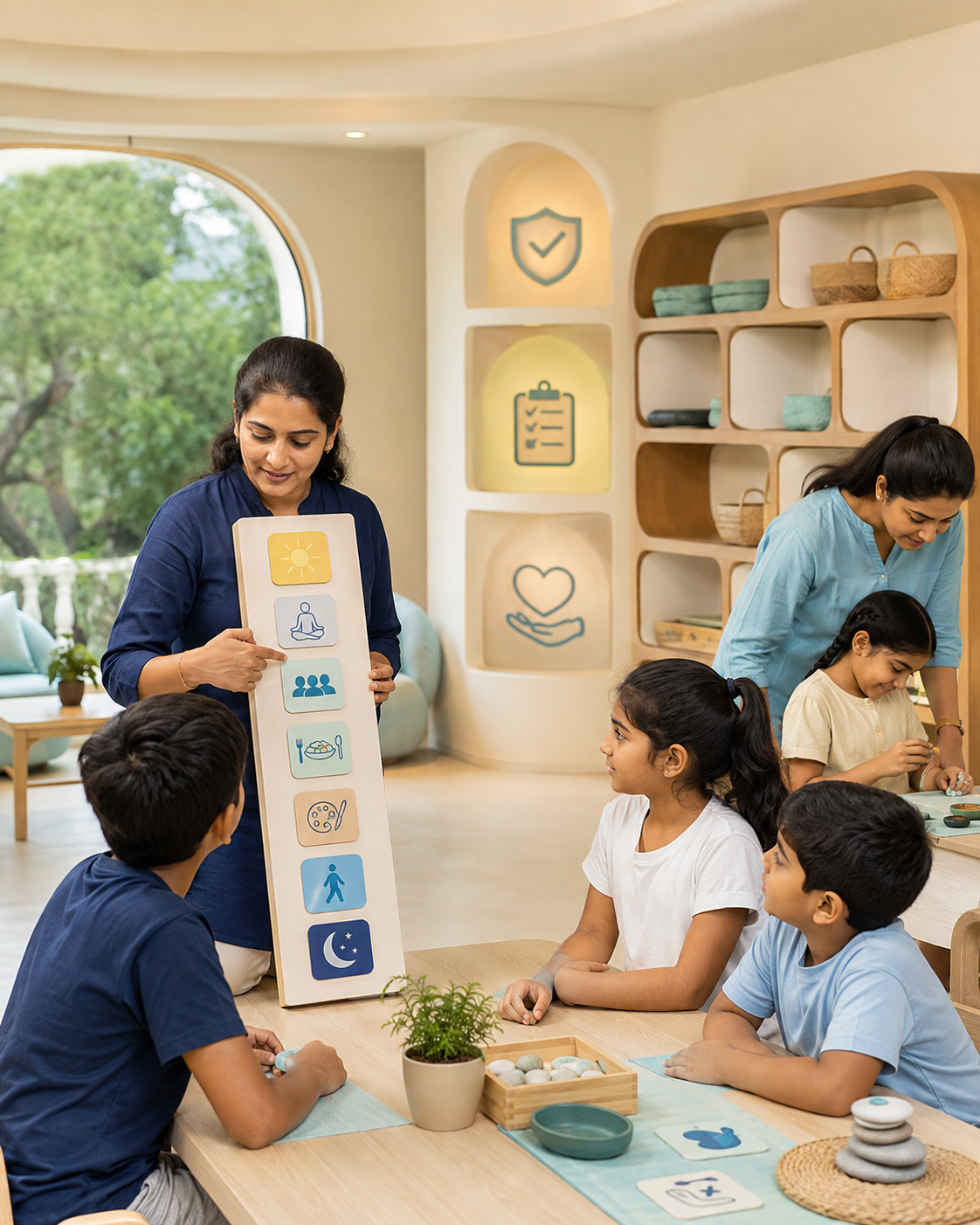
OBSERVE • UNDERSTAND • SUPPORT
Notice when focus becomes difficult and what helps.
Important:
These behaviours do not automatically indicate a particular condition.
Understanding when attention becomes difficult and what helps the child
focus can provide valuable information.
BUILDING ATTENTION GRADUALLY
Begin With What the Child Can Manage Successfully
Instead of expecting a child to immediately focus for a long period, activities can begin with a duration the child can manage successfully.
FOCUS
→
COMPLETE
→
SHORT BREAK
→
RETURN
As the child becomes more comfortable, the length or complexity of the activity can gradually increase.
Reduce unnecessary distractions
Give one instruction at a time
Use visual schedules
Set clear beginning and finishing points
Break longer tasks into smaller sections
Include short movement breaks
Use timers when appropriate
Connect activities with interests
Recognise successful participation
MEMORY DEVELOPMENT
Helping Children Hold and Use Information
Memory plays an important role in almost every learning activity.
Letters & sounds
New vocabulary
Number facts
Classroom instructions
Daily routines
Story sequences
Rules
Where belongings are kept
Steps in a task
A child may understand information when it is explained but have difficulty holding, organising or retrieving it later.

WORKING MEMORY
Make Multi-Step Information Easier to Manage
Working memory allows children to temporarily hold information while using it.
MULTI-STEP INSTRUCTION
“Get your bottle, put your book in your bag and bring your shoes.”
↓
Pictures, checklists and visual schedules can reduce the amount of
information a child needs to remember at once.
STRENGTHENING MEMORY THROUGH MEANINGFUL LEARNING
Give Children More Than One Way to Learn
Repetition can help memory, but repetition becomes more effective when information is meaningful.
Visuals
Pictures, diagrams and demonstrations.
Movement
Actions and hands-on participation.
Association
Connect new information with something familiar.
Practice
Revisit concepts across different situations.
Organisation
Group related information together.
Stories
Place information into a meaningful sequence.

PLAN • ORGANISE • COMPLETE
Help children understand what comes next.
PLANNING & ORGANISATION SKILLS
Helping Children Understand What Comes Next
Planning involves understanding a goal and deciding what needs to happen to achieve it.
What do I need?
→
Where is it?
→
What goes first?
→
Have I finished?
Frequently forgetting materials
Difficulty starting activities
Not knowing what to do first
Completing steps in the wrong order
Losing track during multi-step activities
Needing constant adult reminders
Difficulty estimating how long a task will take
DEVELOPING SEQUENCING SKILLS
Understanding the Correct Order of Actions
Sequencing supports routines, reading comprehension, writing, mathematics and everyday independence.
Following routines
Reading comprehension
Writing
Mathematics
Dressing
Preparing food
Classroom assignments
Telling stories
Understanding time
EVERYDAY EXAMPLE
01Pick up toothbrush
02Add toothpaste
03Brush teeth
04Rinse
05Put toothbrush away
Brush Teeth
PROBLEM-SOLVING SKILLS
Helping Children Think Through Challenges
Problem solving involves recognising that something is not working and considering another way forward.
“What happened?”
“What could you try?”
“Is there another way?”
“What do you need?”
“Would you like some help?”
Puzzles, construction toys, matching games, sorting tasks and practical everyday challenges can provide natural opportunities for problem solving.

FLEXIBLE THINKING
Learning to Adapt When Things Change
Flexible thinking helps children gradually adapt when circumstances do not happen exactly as expected.
Prepare for Change
Give children advance information when possible.
Introduce Variations
Make small changes gradually and supportively.
Offer Alternatives
Provide another appropriate option when needed.
Try Another Solution
Practise more than one way to approach a problem.
Use Stories
Discuss unexpected situations through familiar examples.
Notice Adaptation
Recognise successful flexibility and adjustment.
DEVELOPING EXECUTIVE FUNCTION SKILLS
Skills That Help Children Manage Themselves and Their Activities
Attention
Staying engaged with relevant information.
Working Memory
Holding information long enough to use it.
Planning
Understanding what needs to happen.
Organisation
Keeping information, materials and actions structured.
Inhibitory Control
Pausing before immediately responding.
Flexible Thinking
Adjusting when situations or expectations change.
Self-Monitoring
Recognising whether a task is going as expected.

MAKING TASKS EASIER TO UNDERSTAND
Change How the Information Is Presented
INSTEAD OF
“Clean everything up and get ready because we're leaving soon.”
↓
TRY
First: Put the toys in the box.
Then: Put on your shoes.
Next: Pick up your bag.
Clear structure reduces the amount of information the child needs to process simultaneously.
VISUAL SUPPORTS FOR FOCUS & PLANNING
Let Children See What Comes Next
Many children benefit from seeing what they need to do rather than relying entirely on spoken reminders.
Daily Schedules
First–Then Boards
Checklists
Picture Sequences
Calendars
Task Planners
Timers
Colour-Coded Materials
Finished-Task Boxes
Visual tools can gradually shift responsibility from repeated adult
reminders towards greater child independence.
CREATING A FOCUS-FRIENDLY LEARNING ENVIRONMENT
The Environment Can Influence Concentration
Reduce Visual Clutter
Keep only the materials needed for the current activity on the table.
Manage Background Noise
A quieter environment may make instructions easier to process.
Create a Predictable Workspace
Using the same learning area can help establish a routine.
Keep Materials Organised
Designated spaces can reduce unnecessary searching.
Include Movement
Short movement breaks may support readiness to return.

CALM • CLEAR • PREDICTABLE
The ideal environment varies from child to child.
BUILDING INDEPENDENCE
Move Beyond Dependence on Constant Reminders
The longer-term goal is to help children gradually remember what to do independently.
Instead of reminding a child every morning what belongs in their school bag,
provide a simple visual checklist and gradually encourage them to check it
independently.
HOW PARENTS CAN SUPPORT COGNITIVE SKILLS AT HOME
Everyday Activities Can Build Thinking Skills
Cognitive development does not require complicated exercises. Many familiar activities naturally strengthen learning skills.
Puzzles
Memory Games
Matching Activities
Building Blocks
Sorting Objects
Board Games
Reading Together
Retelling Stories
Following Simple Recipes
Planning an Activity
Organising School Materials
Household Routines
Finding Patterns
Simple Strategy Games
WHAT PARENTS CAN NOTICE & RECORD
Look for the Conditions That Help Your Child Perform at Their Best
Attention
How long can your child comfortably remain engaged?
Environment
Does focus change in quiet versus busy environments?
Instructions
Can your child follow one, two or several instructions?
Memory
Does your child remember information after a short delay?
Planning
Can your child determine independently what to do first?
Organisation
Can they find and manage the materials needed?
Problem Solving
What happens when something does not work?
Helpful Strategies
Do visuals, demonstrations, breaks or shorter tasks help?
PERSONALISED FOCUS & COGNITIVE DEVELOPMENT SUPPORT
Every Child Has an Individual Learning Profile
At AstraKids, support can begin by understanding the child's existing abilities, learning style, strengths and areas that may require additional guidance.
Attention & Engagement
Participating for gradually longer manageable periods.
Memory
Remembering and using information more effectively.
Following Instructions
Understanding increasingly complex directions.
Planning & Sequencing
Organising actions into meaningful steps.
Problem Solving
Developing strategies for approaching challenges.
Flexible Thinking
Adapting to changes and considering alternatives.
Organisation
Managing activities and materials more independently.
Independent Learning
Gradually reducing dependence on adult prompts.
PROGRESS HAPPENS ONE SKILL AT A TIME
Make Learning Clearer, Smaller and Easier to Manage
A child who struggles to concentrate, remember instructions or organise tasks may need more than repeated reminders.
With appropriate support and consistent opportunities to practise, children can gradually strengthen the cognitive skills that help them learn, plan, remember, solve problems and participate more independently.
FOCUS
REMEMBER
PLAN
ORGANISE
SOLVE
GROW
HELP YOUR CHILD BUILD STRONGER LEARNING SKILLS
Support Attention, Memory, Planning and Independent Learning
If you have noticed ongoing difficulties with your child's attention, memory, organisation, planning or problem solving, speaking with the AstraKids team can help you explore suitable next steps.
?
NOT SURE WHICH SUPPORT MAY BE APPROPRIATE?
Speak with the AstraKids team about your child's individual
strengths and learning needs.
Professional Disclaimer:
AstraKids provides personalised educational and developmental support
according to individual requirements. Specific outcomes and development
timelines may vary for every child. Information on this website should
not replace medical diagnosis, clinical treatment or professional
healthcare advice.